Author: Nabeel

  • What Is Data Ownership?

    What Is Data Ownership?

    So, Who Really Owns Your Data? (Spoiler: You should)

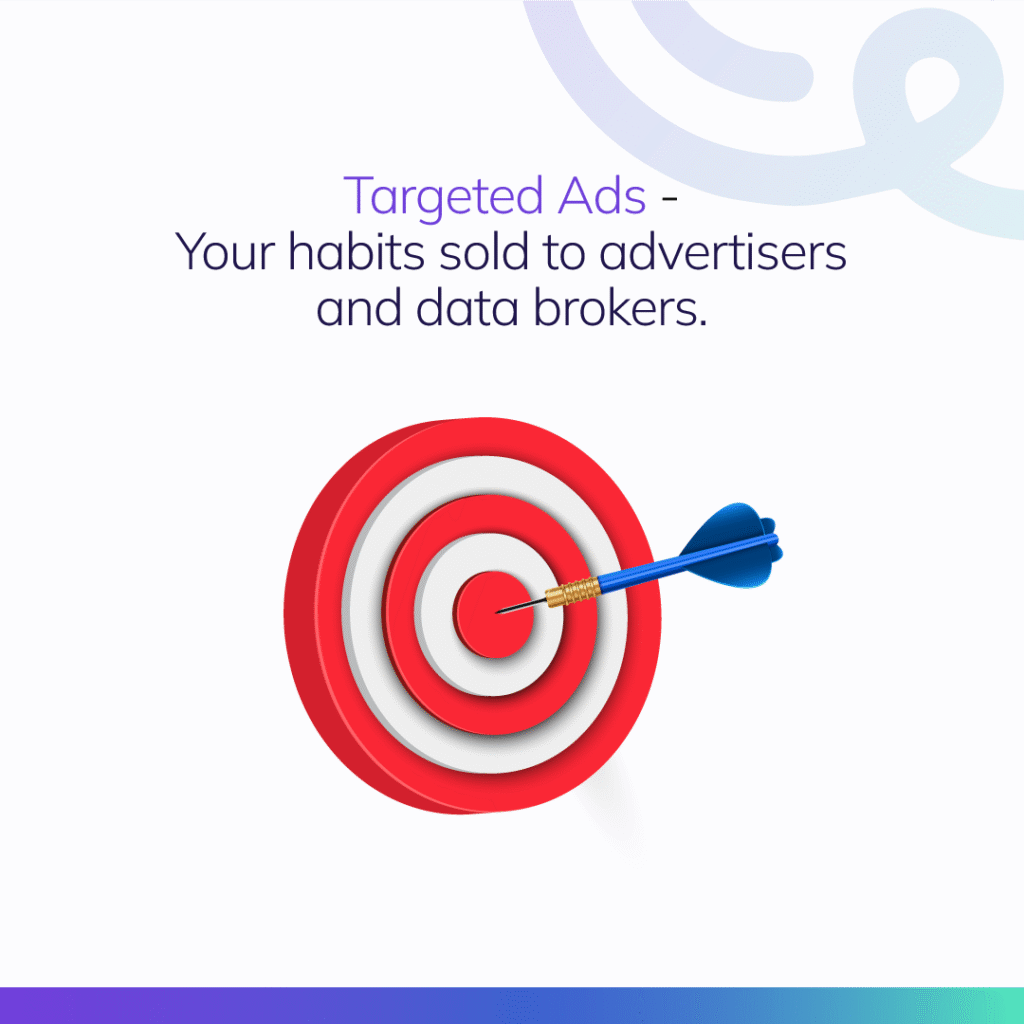
    Picture this: It’s 2 a.m. You’re scrolling Instagram and pause on a pair of sneakers for three seconds. Next morning? Those sneakers are following you everywhere. Facebook, YouTube, that random recipe blog. They’re stalking you.

    Here’s the wild part: You didn’t even know you were shopping. But someone else did. They’ve already profiled your late-night habits, shoe size, salary, and how likely you are to impulse-buy when tired.

    Welcome to the data economy, where you’re not just the customer. You’re also the product.

    Quick reality check: Your data is worth approximately $200 per year to tech companies. But, have you been paid? Didn’t think so.

    What They’re Really Collecting

    When we say “data,” we mean everything.

    Just ask Sting and his song about obsessive surveillance that everyone mistakes for a love song? Yeah, that’s basically your apps right now.

    Every breath you take. Every photo you take…

    Every move you make. Every photo you post…

    Every step you take. Every comment you leave…

    Every night you stay. Every playlist you make…

    Here’s a fun fact that’s not fun: The average app shares your data with 40+ third-party companies. But, can you name five of those companies? No, and that’s the problem.

    Why It Actually Matters

    Your data isn’t sitting in some file collecting dust. It’s actively being used to:

    Change what you pay. Flight prices jump based on demand and timing. Some travel sites show higher prices to repeat visitors. The algorithm is watching.

    Control what you see. Algorithms decide your reality online. Your news feed, search results, even dating matches. They’re not showing you truth. They’re keeping you scrolling.

    Predict your future. Companies build models to predict major life events before they happen. Employee turnover, major purchases, life changes — did your digital behavior give you away?

    Target your vulnerabilities. Are you late-night scrolling? Feeling stressed? Algorithms know precisely when you’re most likely to click, buy, or engage.

    Your data isn’t just information. It’s power. And someone else is holding it.

    The Ownership Illusion

    You take a photo. You own it. That’s the copyright, the intellectual property, the right to say “this is mine.”

    You upload it to Instagram. You still own it, but now:

    • Access? Instagram can see it anytime, forever. Even if you delete the app. Their servers keep copies for “technical reasons.
    • Control? You can delete it from your profile, but you can’t control what Instagram does with it behind the scenes. They’re feeding it to their AI to train models, using it to analyze trends, and showing patterns to advertisers.
    • Custody? It’s not just on your phone anymore. It lives on Instagram’s servers, backup servers, content delivery networks and maybe some cloud storage in three different countries.

    You own it on paper, but Instagram has access to it, significant control over how it’s used, and custody of where it actually lives.

    It’s like owning a car, but someone else has the keys, decides when you can drive it, and parks it wherever they want.

    Myths To Retire

    “If it’s on my phone, it’s mine.” Cloud backups and syncs mean your data has sleepovers you don’t know about.

    “Deleted means gone.” Copies, caches, and screenshots outlive your gym membership.

    “I have nothing to hide.” You close the bathroom door. Privacy isn’t about hiding. It’s about choosing.

    The receipts: In 2019, period tracking apps were caught sharing intimate health data with Facebook. Pregnancy status, cycle dates, and sexual activity. Without clear consent.

    How To Take Back Control

    You don’t need to go off-grid. Just start paying attention:

    • Check before you click “I agree.” If an app wants your contacts, camera, microphone, and firstborn, reconsider.
    • Audit your settings regularly. See who’s at your data party. Kick out the 2019 lurkers.
    • Turn off unnecessary permissions. Your flashlight doesn’t need your location.
    • Use actual passwords. Not “password123” or your dog’s name plus birth year. Hackers have Google, too.
    • Share less. Not everything needs to be posted. Some moments can just exist. The mystery adds to your appeal.
    • Know your rights. Data protection laws are spreading globally — from GDPR in Europe to CCPA in California to PDPA in Asia. Many give you the right to access, download and delete your data. Use them.

    The Bottom Line

    Your data is a digital version of you. Right now, others are using it to make money and decisions without asking.

    But you can change that.

    When you know what you create, where it lives and who’s using it, you stop being the product. You become the one in control. That’s the glow-up we all deserve.

    It’s your data. Your choice. Your move.

    CheckD’s here to help you keep it that way. Safely, smartly, with confidence.

    Because privacy isn’t boring anymore. It’s just good self-respect for your digital self.
  • Wait… What’s Data and Why Should I Care?

    Wait… What’s Data and Why Should I Care?

    A fun, no-jargon intro to data in your day—what it is, where it shows up, and two tiny tweaks you can make right now (plus a Data Noob badge).

    Here’s a weird thought: your day leaves footprints—not in sand, in data.

    Your alarm learns you snooze twice on Mondays. Maps suggests the café you go to when you “forget” to cook. Spotify lines up a playlist called It’s Too Early For Lyrics. Netflix pretends it doesn’t know about your reality-TV phase (it absolutely knows).

    You open Google, type “pizza,” and before you finish it suggests pepperoni with extra cheese. Your go-to order. Creepy? Maybe. Useful? Definitely. You’re in control here—one tiny setting at a time.

    That’s data. Not sci-fi. Not spreadsheets. Just tiny stories about you.

    Data = Notes About What Happened

    A tap, a swipe, a location ping, a heart on a post, a payment at 6:34 p.m. Alone, tiny. Together, a story—your morning routine, your music moods, the places you love, the purchases you regret (hello, 3 a.m. air fryer).

    You’re Already Using Data (Constantly)

    • Food apps: remember your go-to toppings and nudge you at 6:30 p.m. (“Mushrooms again?” Yes.)
    • Music streaming: upbeat on the commute, lo-fi at night → mixes you didn’t know you needed.
    • Streaming TV: finish a heist movie? three more queued. (No judgment.)
    • Maps & rides: guess your destination before you type—because Tuesdays = gym.

    Stack these “tiny helps” and they start steering what you see, buy, eat, hear—even believe.

    Why You Should Care (No Jargon)

    • Tune convenience: more of what helps, less of what wastes time.
    • Unlock perks: streak rewards, student deals, “10th visit” surprises.
    • Take the wheel: notice the signals, steer your day—one tiny setting at a time.

    A 2-Minute Challenge: Spot Your Data Today

    Open three things and just notice what they say about you:

    1. Spotify/YouTube Music: what mood do your top tracks reveal?
    2. Google/Maps: what autocomplete or “leave now” tips pop up?
    3. Fitness/phone dashboard: any trend you didn’t expect?

    No spreadsheets. No homework. Just awareness. You can’t shape what you don’t see. Spot one pattern you like—keep it. Spot one you don’t—tweak it.

    Optional: Your 24-Hour Data Diary

    For one day, jot three things: Touchpoints (apps you used), Guess the why (what each app assumed about you), Keep or tweak (do you want more or less of that?). Not guilt—awareness.

    Common Terms, Human Translation (Super Quick)

    • Cookie: a little note a site leaves so it remembers you.
    • Personalization: “we noticed you like X; here’s more X.”
    • Privacy settings: the knobs for “who can see what.” Try one today—you can always switch it back.
    • Badge: a tiny, verifiable proof you did a thing—like finishing this intro journey.

    Okay, But… Who Benefits?

    Mini sidebar — Everyone, if you’re intentional

    Companies use data to improve experiences and sales.

    You can use the same signals to improve routines, save time/money, and say “no thanks” to stuff you don’t want. Think of data like a mirror: look in it to adjust the picture. Ignore it, and someone else writes the captions.

    Your Next Tiny Step (and a Small Win)

    • Rename one nudge so it helps. Change “Screen time up 32% 😬” to “Time for a 10-minute break?”
    • Flip one setting you don’t use. Autoplay you always swipe away? A notification you ignore? Turn one off. See if you miss it.
    • Make one request of your feeds. Search for something you want more of (local artists, recipes under 15 minutes). Your apps learn from you, too.

    Quick win: Most readers find one notification to rename and one autoplay to turn off. Net: ~10–15 minutes/day back.

    Level Up in CheckD

    You’ve moved from “Wait, what?” to “Ohhh, I see it.” The Data Noob badge is proof you noticed—not a test. Data isn’t boring—it’s you.

    The more you notice it, the more you get to decide how it shapes your day.

  • Proofs Are the New Units of Trust — and How to Use Them

    Proofs Are the New Units of Trust — and How to Use Them

    A dollar bill is paper until people agree it has value. A medal is metal until a community agrees it signals achievement. A badge is just an icon—until it’s a proof.

    Proofs are portable, verifiable claims that others can independently check. They open doors, cut friction, and convert reputation into outcomes. At Stage 5 in our Data Mastery series, you don’t just collect badges—you leverage them.

    As Daniel Keys Moran put it, “You can have data without information, but you cannot have information without data.” Proof is how raw data becomes usable information. And when that information is signed, portable, and independently verifiable—it becomes power.

    What a proof is (plain English)

    proof is a cryptographically signed credential—a badge—that asserts something about you (a skill, a compliance check, or a verified action). Anyone can confirm the issuer’s public key and the badge’s current status (valid, expired, or revoked).

    Proofs have four key properties:

    • Portable: Travels across wallets, profiles, and apps.
    • Verifiable: Signature can be checked in seconds.
    • Revocable/expiring: Trust stays current.
    • Composable: Stack badges to build richer credibility.

    Together, these properties make proofs far more than digital tokens—they become living credentials that travel with you, adapt to context, and earn trust wherever you go.

    The trust loop: issuer → holder → verifier

    Every proof lives inside a loop of trust—a simple flow that makes verification reliable and scalable.

    • Issuer creates and signs a badge (e.g., a certifying body, registry, or institution).
    • Holder stores and presents it—through a wallet, profile, QR, or API.
    • Verifier checks the signature and current status, then grants value (access, discount, role).

    Trust flows from issuer reputation. Verification checks the signature and current status—not just the holder’s claim. This loop ensures that trust doesn’t rely on faith alone—it’s backed by cryptography and issuer reputation.

    Where proofs create value

    Proofs generate tangible value across roles by solving problems that words and promises can’t. They cut through uncertainty, save time, and strengthen reputation.

    Here’s how the impact shows up for each type of participant in the ecosystem:

    • For holders: Proofs are your trust résumé. They provide credibility by backing up your claims with receipts that others can check.
    • For issuers: Proofs establish brand and reputation you can prove. Every badge you issue is a credential that strengthens your authority as a trusted source.
    • For merchants: Proofs reduce friction and cost. Instead of dragging customers through lengthy checks, you can accept verified trust with fewer manual steps—because the badge has already done the heavy lifting.

    Across these roles, the common thread is clear: proofs reduce friction, increase confidence, and turn trust from a vague promise into something measurable and exchangeable.

    Proofs in action

    This isn’t theory—it’s happening now in ways that touch commerce, sustainability, and culture. Proofs show up in daily life wherever trust needs to move faster and with fewer doubts:

    • Merchants: A retailer offers a 10% “Green Perk.” A customer presents a Carbon Offset Badge from a vetted registry. The store’s system verifies the issuer’s signature and checks that the badge isn’t revoked—in seconds. Discount applies, audit trail is logged, minimal manual review.
    • Farmers: A grower carries a “Sustainable Yield Badge” certifying organic practices. Instead of repeatedly proving compliance, the badge travels with them, earning trust from eco-conscious merchants and higher value in green markets.
    • Gamers: A player shows a “Verified Esports Achievement Badge.” Sponsors and tournament hosts confirm it quickly. It’s more than bragging rights—it’s legitimacy that unlocks opportunities.

    Each vignette shows the same pattern: a proof doesn’t just symbolize trust—it delivers it.

    How CheckD makes proofs work

    CheckD makes proofs usable in the real world. Without a framework, proofs would stay as abstract concepts—good in theory but hard to apply. CheckD gives issuers, holders, and merchants the tools to create, carry, and check proofs at speed, weaving them directly into digital interactions.

    • Issue & manage: Create signed badges with clear expiry and revocation rules.
    • Hold & present: Store badges in a wallet or profile; present via app, QR, or API.
    • Verify quickly: Apps and merchants check issuer signature + current status in seconds, then grant value (access, discount, role).

    With CheckD, proofs move from abstract promises to usable units of trust.

    Proof = power

    Proof isn’t just validation—it’s value. It transforms achievements and credentials into currency you can spend in the trust economy. When a proof is portable, verifiable, and current, it amplifies your credibility, authority, and efficiency in ways words never could.

    • For holders, it’s portable credibility.
    • For issuers, it’s brand and reputation you can prove.
    • For merchants, it’s speed and efficiency.

    Every badge you hold, issue, or accept strengthens your position in the trust economy.

    Leveling Up as Data Boss

    Stage 5 is about more than collecting—it’s about leveraging. You don’t just carry badges—you curate them. You don’t just issue badges—you mint assets. You don’t just accept badges—you scale trust.

    So here’s your move:

    • Holders: Add your top three badges to your public profile. Make them visible where decisions get made.
    • Issuers: Ship one high-stakes badge this week—compliance, completion, or credibility—with clear expiry and revocation rules.
    • Merchants: Start small: verify one proof that cuts your biggest friction point (age, membership, or sustainability).

    At this level, proof isn’t what you show—it’s what you wield. And wielded well, proof becomes power.

  • Data as Your Teammate

    Data as Your Teammate

    Remember Jarvis from Iron Man? Tony Stark didn’t just have a computer. He had a teammate that helped him think faster, anticipate problems, and unlock his full potential. Jarvis wasn’t the hero — but Stark couldn’t have been Iron Man without him.

    Now imagine your data the same way. Not as something abstract or taken from you, but as a trusted teammate that works alongside you. With the right setup, your data isn’t the enemy. It’s the ally that helps you prove, protect, and power your digital life.

    Data as the Wrongly Cast Villain

    Let’s be honest: data has a PR problem. Most people hear the word and think of leaks, hacks, or corporations tracking everything they do. It feels like something stolen, sold, or weaponized.

    And they’re not wrong to be cautious. In the wrong hands, data can be the villain of the story. But here’s the plot twist: with the right tools — CheckD to guide you, and Dataswyft to carry your proofs — data flips roles. It moves from shady NPC to trusted squad member.

    What a Good Teammate Does

    Think about your favorite team sport, MOBA, or even your best project team. A great teammate:

    • Anticipates your next move.
    • Shares the load so you’re not overwhelmed.
    • Covers your weaknesses when you slip.
    • Celebrates wins with you.

    That’s exactly what data can do when you own and manage it through Dataswyft’s wallet. It has your back.

    And just like good AI agents in enterprise systems, data works best when it has context and guidance. That’s where CheckD comes in — the coach that trains you to use your data teammate effectively.

    Data as a Teammate Across Contexts

    So what does this look like in practice? Let’s break it down by role — Holders, Issuers, and Merchants.

    For Holders (Individuals)

    Your data teammate helps you:

    • Prove identity without oversharing.
    • Unlock perks like student discounts, loyalty rewards, or event access.
    • Simplify everyday actions (no more juggling 12 logins).

    Imagine you’re a student buying a concert ticket. Instead of handing over your entire enrollment history, your teammate steps in: “I got this.” One quick proof, verified and reusable.

    This is exactly what HSBC calls augmentation: a teammate takes care of the repetitive or tedious tasks, freeing you to focus on higher-value actions. That’s not science fiction — it’s how data works when you’re in control.

    For Issuers (Institutions, Creators)

    For issuers, data teammates ensure credibility and continuity. Proofs aren’t just one-time slips of paper; they’re reusable, portable credentials that earn trust wherever they’re presented.

    Think of a reliable midfielder always setting up plays. A university issues a badge once, and your data teammate carries it forward — whether you’re applying for a job, joining a guild, or unlocking new perks.

    Enterprise AI works in a similar way: once a credential or instruction exists, it doesn’t sit idle. It continues to work on the user’s behalf across contexts, strengthening trust and reducing redundancy. Data teammates bring that same power into your daily life.

    For Merchants (Businesses)

    For merchants, a data teammate transforms transactions from clunky to seamless:

    • No need to sift through unnecessary personal history.
    • No awkward over-collection of sensitive details.
    • Just the exact proof required to complete the exchange.

    Picture selling an age-restricted item. Instead of demanding an ID that exposes everything from your address to your birthday, your data teammate steps in like a bouncer: “Verified. Let them in.”

    This reflects a growing principle in digital trust: don’t expose more than necessary. A good teammate doesn’t overshare — it delivers just what’s needed to build confidence. That balance makes transactions both efficient and respectful.

    CheckD as the Coach, Dataswyft as the Teammate

    Here’s the key distinction:

    • Dataswyft = your data teammate. It carries your proofs, manages your identity, and ensures smooth interactions.
    • CheckD = your coach. It’s where you build the skills, confidence, and literacy to manage your teammate.

    Having a teammate is powerful — but without training, strategy, and guidance, even the best teammate can be underused. CheckD gives you the playbook so your data teammate plays the right role in every match.

    The same way AI systems need context to avoid going off track, your data teammate needs coaching. That’s what CheckD provides — the grounding and direction so Dataswyft can play its role effectively.

    The 3 P’s

    Your data isn’t the enemy. With CheckD as the coach and Dataswyft as your teammate, you can:

    • Prove who you are, when you need to.
    • Protect your privacy, sharing only what’s necessary.
    • Power your digital life with smoother, safer interactions.

    You already know data matters. Now it’s time to rethink your relationship with it.

    Leveling Up From Mid to Pro

    Remember: Jarvis wasn’t just tech. He was Stark’s edge — a partner that made the hero even greater.

    Your data can be the same, if you let it.

    So here’s your call-to-action:

    • Holders: Start using your teammate — let it unlock perks for you.
    • Issuers: Put your teammate to work — build trust with proofs that last.
    • Merchants: Team up with data — make customer trust your competitive edge.

    This is your moment as a Data Mid: not just to use data, but to lead with it.

    Because when you and your teammate work together, you don’t just play the game — you change it.

  • Why is Data Important to Companies?

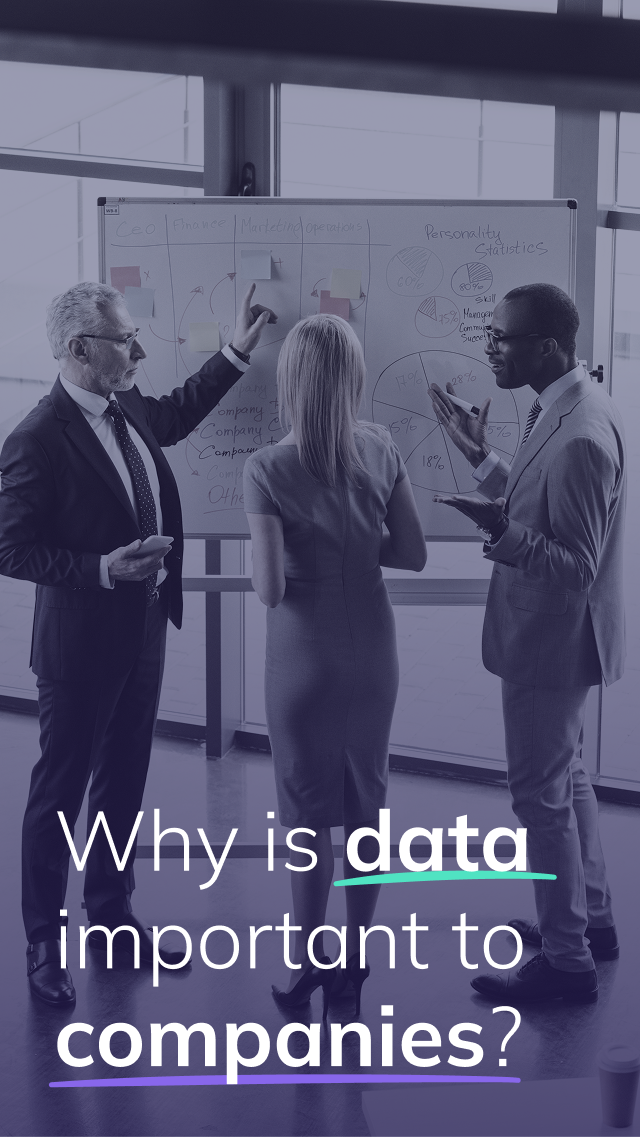
    Why is Data Important to Companies?

    Ever wonder why your favorite game suddenly gets an update, or why Netflix always seems to know what show you’ll binge next? The answer isn’t magic. It’s data.

    Data is the secret ingredient companies use to make decisions, improve your experience, and stay ahead of the game. Without it, they’d be flying blind — like trying to beat the final boss without a map or gear.


    What is Data, Really?

    Before we dive in, let’s keep it simple: data is just information.

    Every time you:

    • Play a round of Fortnite
    • Stream a new track on Spotify
    • Or even scroll TikTok for “just five more minutes”…

    …you’re creating data. Clicks, choices, playtime, likes, purchases — all of these leave behind digital footprints.

    If you’ve ever checked your K/D ratio in Call of Duty or waited eagerly for your Spotify Wrapped, you’ve already used data yourself. It’s not some mysterious code; it’s simply the story of your actions, captured in numbers. And here’s the reassuring part: data isn’t scary. It’s just the everyday signals you’re already sending, written in digital form.


    Why Do Companies Care So Much?

    Here’s the thing: for companies, data isn’t just “nice to have.” It’s essential. Many even say it’s one of their most valuable resources — just like money, products, or people. And it makes sense: without data, companies would be guessing. And nobody wants to run a game studio, a music platform, or a global business on guesswork.

    Let’s break it down into five big reasons — using gaming as our main example (with a little help from music and movies too).

    1. Better Decisions

    Game developers at Fortnite look at weapon stats: which ones players love, which feel broken, and which get ignored. That’s how they keep the game balanced and fun.

    It works the same way outside gaming. If you skip a song on Spotify, the app takes the hint. If you binge a Netflix show in one sitting, they notice. Data helps all these companies decide what works and what doesn’t — like a mini-map showing the best path forward.

    2. Knowing Their People

    Not all players are the same. Some gamers live for PvP battles, others grind quests, and some just like exploring the map. Data helps studios understand these different “player classes” so they can design features for everyone.

    Spotify does something similar. It knows if you’re into lo-fi beats, metal anthems, or Baby Shark on repeat. Netflix can tell if you’re a rom-com fan or obsessed with true crime. Data lets companies know their people as well as you know your own squad.

    3. Spotting Trends

    Remember when Among Us suddenly exploded in popularity? That wasn’t just luck. Data showed that players wanted fun, social games they could stream with friends. Developers leaned into the trend — and boom, it went viral.

    The same happens with music and shows. A sound goes viral on TikTok, and suddenly Spotify pushes it into playlists. Netflix sees viewers leaning into dystopian dramas, and suddenly you’ve got three new ones to watch. Data is like an early radar for what’s about to blow up.

    4. Saving Time & Money

    Game studios don’t have infinite time or budget. Instead of testing 100 random ideas, data shows them the top three players actually care about. It’s like skipping side quests with no XP and heading straight to the main storyline.

    Netflix works the same way — if people drop a show after one episode, they don’t pour more money into a second season. Data keeps everyone efficient.

    5. Staying Ahead of Competition

    Think of PUBG versus Fortnite. PUBG may have introduced battle royale, but Fortnite perfected it by studying what players loved most. That edge came from data.

    Spotify does the same to stay ahead of Apple Music. Netflix does it to outpace Hulu or Disney+. In every case, data works like a cheat code: it gives companies the edge to win.


    Why Should You Care?

    Okay, but what does this mean for you?

    Well, every time you log in to play, listen, or stream, data is shaping your experience:

    • That new weapon buff in your favorite game? Data-driven.
    • Your Discover Weekly playlist on Spotify? Data-driven.
    • That “oddly perfect” Netflix recommendation? Yep, data again.

    Now you’re probably thinking: wait, does this mean every playlist, every update, every show recommendation is powered by data? Yep. That’s exactly it.

    Knowing this gives you a new lens. You’re not just a passive player or viewer — you’re part of the loop. Companies make decisions based on your actions. That means the more you understand how data works, the more control and awareness you have over your digital world.


    Leveling Up from Data Noob

    Data isn’t scary. It’s the reason your games stay fresh, your playlists feel personal, and your shows hit the right mood. For companies, it’s the fuel that drives decisions, growth, and innovation.

    So here’s your mini-quest:

    Next time you open your favorite game, ask yourself: “What data did the developers use to make this update?”


    Congrats, you’ve just unlocked your first step as a Data Noob — and you’re already on the path to becoming a Data Apprentice.

    Because once you start noticing data, you’ll see it everywhere.

  • Why Owning Your Data Creates Power

    Why Owning Your Data Creates Power

    Why Owning Your Data = Real Power

    You’ve heard the line: “Data is the new oil.”

    Well… yeah. Every swipe, tap, bill, grade, or doctor’s visit leaves behind a little piece of you. Banks have your money moves. Schools have your records. Hospitals? Your whole health story. Socials? Every meme you’ve ever liked.

    That’s all data. That’s oil.

    But here’s the twist: You don’t actually own the oil fields. Big players drilled the wells, and right now, they’re cashing in.

    Socials track your every scroll for ads and cat videos.

    Retailers know your browsing habits so well that they might spill your pregnancy before you tell your parents.

    Tech giants? They’ve built empires out of your playlists, clicks, and snack preferences.

    Your data is valuable, but only in their world, for their benefit.

    Control ≠ Power

    Sure, laws say you can “access” your data. You can request it, download it, or maybe even email it somewhere else. Cool. But access alone? That’s not power.

    Power is when your data can actually move — across apps, across services, across countries — and work for you. Right now, it doesn’t. That’s why:

    • You still fill in the same forms at every clinic.
    • Ads show you stuff you already bought.
    • Your old school or bank records are basically locked in a vault.

    The answer isn’t handing everything to one mega-company. That’s creepy. The answer is owning it yourself.

    Owning Your Data = Market Power

    Owning your data doesn’t just mean control. It means leverage.

    Instant Proofs

    Job hunt? Instead of scanning dusty certificates, share a verified record from your data wallet. No waiting. No fakes. Just trust, instantly.

    Opportunities Unlocked

    Starting a hustle or applying for credit? Drop your credit history from your utility company straight from your wallet. Lenders see receipts, you get the green light faster.

    You Set the Rules

    Health app wants your workout data? Cool! But only if you get real perks back. Lower premiums, free consultations, whatever you decide.

    From Me-Power to We-Power

    Now imagine whole communities doing this:

    • Students pool their data for discounts that make education less brutal.
    • Farmers use their land and crop data to bargain for fairer prices.
    • Patients trade health data for cheaper insurance that actually makes sense.

    One person owning their data = power.

    Everyone owning it = A MOVEMENT!

    The Future is Already Here

    Data wallets are giving Venmo vibes. But, instead of splitting pizza money, you’re moving your data, on your terms. Safely. Only when you choose.

    This isn’t just convenience. It’s a power shift.

    Your data becomes more than info. It’s an opportunity. It’s leverage. It’s yours.

    The future of data ownership isn’t tomorrow.

    It’s right now.

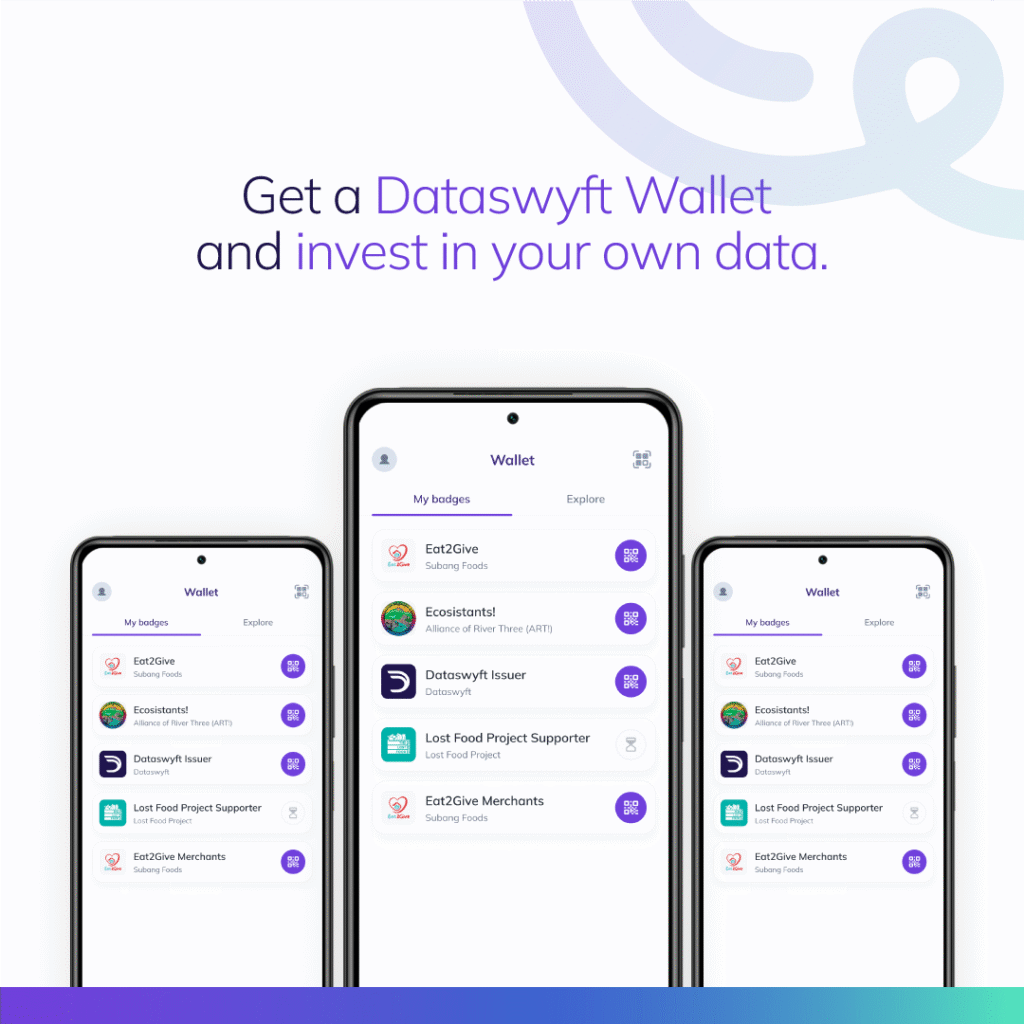
    So start investing in your data today.

  • Life with Proof

    Life with Proof

    Learn how living your life with proof looks like!

  • 5 Ways your data is being misused

    5 Ways your data is being misused

    Ever thought how your data might being misused? Here are 5 ways!

  • Eat2Give Guide

    Eat2Give Guide

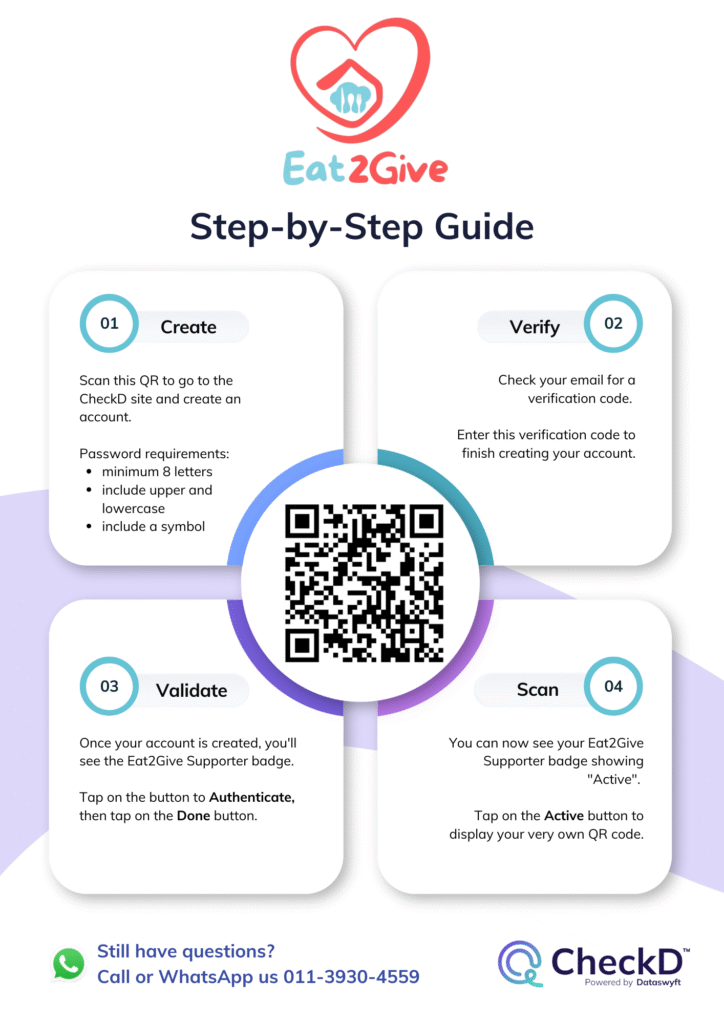
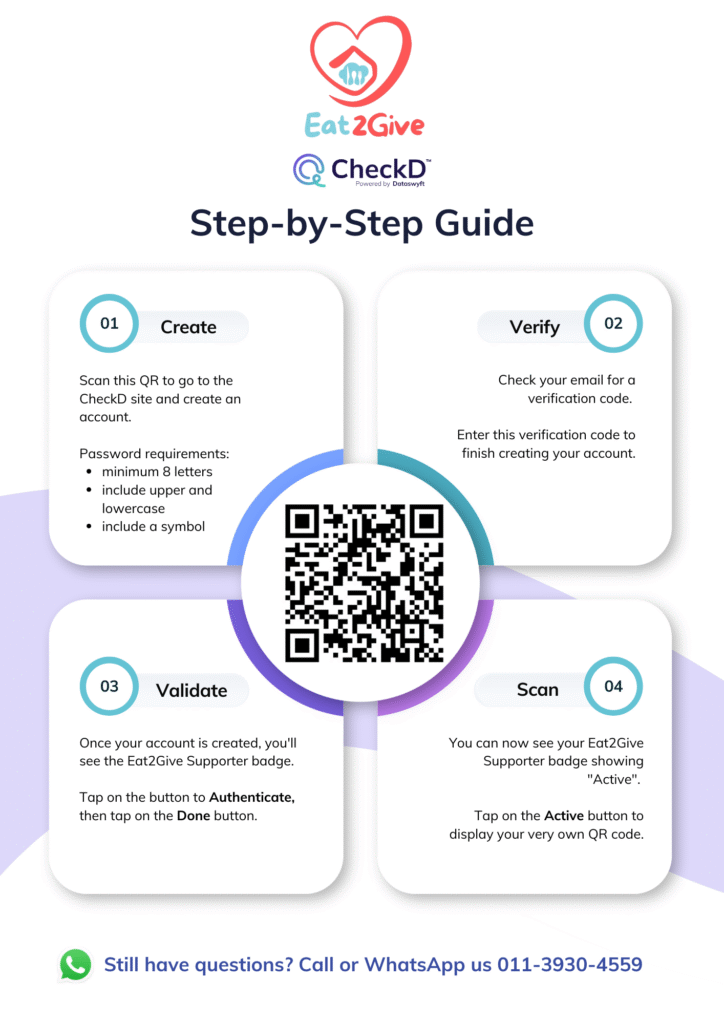
    Here are two versions of Eat2Give guide for you!